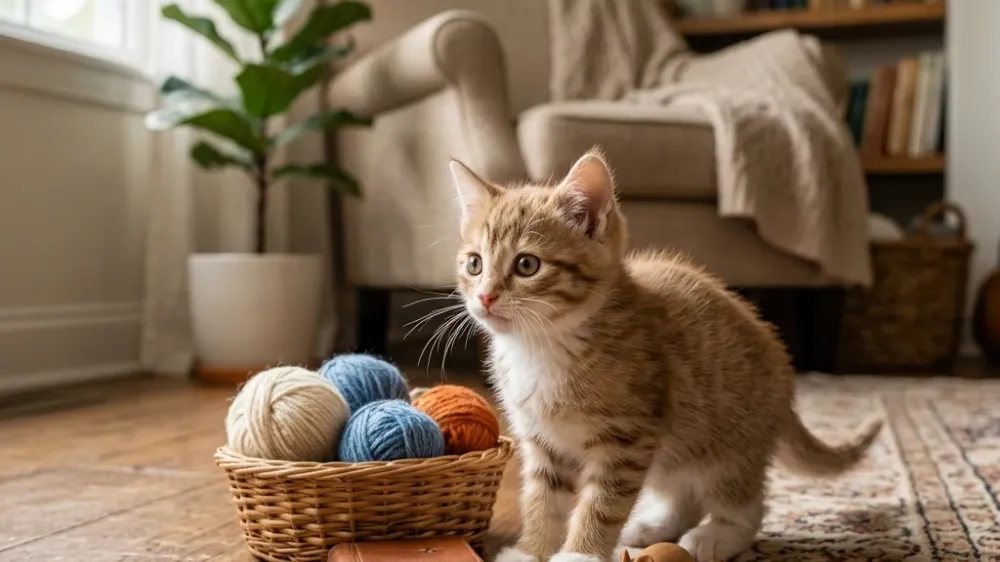
Bringing home a new kitten is a joyous and exciting milestone. However, transitioning into a new environment can be stressful for a young feline who has just left their mother and littermates.
Preparing your home in advance ensures your new kitten feels safe, secure, and confident from the moment they arrive. This comprehensive guide walks you through every step of bringing home a kitten, from safe room setup and kitten-proofing to litter box success, nutrition schedules, and health routines.
📋 In This Guide
Preparing a Safe Room for Arrival#
When a kitten first steps into a new house, vast open rooms can feel overwhelming. Establishing a dedicated safe room allows your kitten to adjust at their own comfortable pace before exploring the rest of your home.
Ideal spaces include a quiet spare bedroom, home office, or laundry room that can be closed off from loud noises and other family pets.
Equip your kitten’s safe room with these core essentials:
- Litter Box Placement: Position a low-sided, open litter box in a quiet corner. Keep it at least six feet away from food and water bowls.
- Fresh Water and Food Stations: Use shallow ceramic or stainless steel bowls for kitten food and fresh water. Avoid plastic bowls, which can harbor bacteria that cause feline chin acne.
- Cozy Sleeping Nook: Provide soft fleece blankets or a plush donut bed placed in a warm, draft-free area.
- Safe Hideouts: Place a cardboard box with a cut-out door or a covered cat bed so your kitten has an immediate sanctuary if they feel startled.
💡 Pro Tip: Place scratching posts directly adjacent to sleeping spots, as kittens naturally love to stretch their muscles and scratch immediately after waking up.
Kitten-Proofing Your Home#
Kittens are naturally curious explorers who use their paws and mouths to investigate every nook and cranny. Thoroughly kitten-proofing your home prevents common household hazards.
Electrical Cords and Wires#
Exposed cables look like tempting toys to a chewing kitten. Secure loose cords behind furniture, use protective cord covers, or treat wires with pet-safe bitter sprays.
Toxic Houseplants#
Many common house plants are dangerous or fatal if ingested by cats. Remove toxic plants, including lilies, poinsettias, monstera, pothos, and sago palms. Replace them with cat-friendly greens like cat grass or spider plants.
Small Objects and Strings#
Kittens readily swallow rubber bands, hair ties, sewing thread, string, and small plastic toys. Keep sewing kits, craft supplies, and hair accessories stored in sealed drawers.
⚠️ Safety Warning: Always check washing machine tubs, dryer drums, and warm appliance openings before closing doors. Young kittens frequently sneak into dark, warm spots to take quiet naps.
Litter Box Introduction and Success#
Most kittens learn basic litter habits from their mothers by six weeks of age. However, a new environment requires gentle guidance to reinforce good habits.
- Immediate Introduction: As soon as you arrive home, carry your kitten directly to the litter box and gently place them inside. Allow them to sniff the litter freely.
- Post-Meal Routine: Place your kitten in the box after every meal, nap, and energetic play session.
- Choose Unscented Litter: Use unscented, fine-grained clumping litter. Heavy perfumes can irritate sensitive kitten respiratory passages.
- Daily Maintenance: Scoop the litter box daily and replace the litter completely once every two to three weeks.
If an accidental mess occurs outside the box, clean the area thoroughly with an enzymatic cleaner. Enzymatic sprays destroy scent molecules so your kitten will not be drawn back to the same spot.
Feeding Guidelines and Hydration#
Kittens undergo rapid skeletal and muscular development during their first six months. They require higher levels of protein, healthy fats, calcium, and calories than adult cats.
Choosing the Right Food#
Feed a diet explicitly labeled for kittens or all life stages. High-quality wet food is ideal because it provides essential moisture, supporting kidney and urinary tract health.
Recommended Feeding Schedule#
- 8 to 12 Weeks Old: 3 to 4 small wet food meals daily.
- 3 to 6 Months Old: 3 meals daily.
- 6 to 12 Months Old: 2 to 3 meals daily.
Always provide a constant supply of fresh water. Many kittens prefer drinking running water, making a stainless steel pet fountain a great investment.
Playtime, Enrichment, and Socialization#
Daily interactive play satisfies your kitten’s natural hunting instincts and prevents unwanted behavior like furniture scratching or night zoomies.
Use wand toys, feather teasers, and lightweight balls to engage your kitten in structured play sessions lasting 10 to 15 minutes, two to three times a day. End each play session by letting your kitten catch their “prey” and feeding them a small treat to complete the natural hunt-eat-sleep cycle.
Interactive Kitten Toy Set
Engaging interactive toys to keep young kittens active and mentally stimulated.
Never use your hands or fingers as play targets. Hand-play teaches kittens that human skin is an acceptable biting surface, leading to painful scratches as they grow.
Health Routine and First Vet Visit#
Schedule your kitten’s initial veterinary checkup within 48 to 72 hours of bringing them home.
Core Health Care Schedule#
- 6 to 8 Weeks: First FVRCP (feline distemper) vaccination and initial fecal examination.
- 10 to 12 Weeks: FVRCP booster shot and parasite control guidance.
- 14 to 16 Weeks: Rabies vaccination and final FVRCP booster.
- 5 to 6 Months: Spay or neuter consultation before sexual maturity begins.
Regular handling of your kitten’s paws, ears, and mouth early on will make future nail trimming, ear cleaning, and vet examinations stress-free.
Frequently Asked Questions#
How long should I keep a kitten in their safe room?#
Most kittens adjust within two to four days. Once your kitten eats regularly, uses the litter box consistently, and approaches you with a high tail, you can open the room door and allow them to explore the rest of the house under supervision.
Why is my new kitten meowing at night?#
Nighttime vocalization is common during the first few nights due to loneliness and unfamiliar surroundings. Provide a warm blanket, a heartbeat plush toy, and keep a nightlight on. Resist the urge to enter the room every time they meow, as this inadvertently rewards nighttime vocal behavior.
When can I start trimming my kitten’s nails?#
You can begin handling your kitten’s paws during quiet cuddling sessions starting from day one. Gently press their paw pads to extend the claws. Use dedicated pet nail clippers to trim just the sharp translucent tip, taking care to stay clear of the pink quick.